


I was nearly finished writing this essay when another tragedy unfolded in Minneapolis.
Last Saturday, federal immigration agents fatally shot Alex Pretti, a 37-year-old U.S. citizen, during an enforcement action. Pretti was lawfully carrying a concealed firearm and additional magazines – facts now central to an investigation that demands full transparency and accountability.
The reaction was immediate and polarized: comparisons to Nazi Germany on one side, calls to press enforcement harder on the other. After Pretti’s death, and the January 7 killing of Renée Good, we’re again forced into false binaries: law enforcement cast as wholly villainous or beyond scrutiny. That framing leaves no room for reasoned, consensus-building reform of how the government fulfills its constitutional duty to enforce duly enacted laws.
Reading about Martin Luther King Jr. on his birthday, I was struck by how deliberately he rejected such divisions. King appealed to Americans’ better angels, rooting his moral case in shared constitutional principles — that justice and order, compassion and law, must stand together. Americans embraced his dream: judge by character, not skin color, party, or place of worship.
That lesson feels urgent in Minneapolis, where anti-ICE protests have escalated from public demonstrations to organized disruption – at airports, in neighborhoods, and at enforcement sites – often accompanied by racist accusations against anyone questioning protestors. On Sunday, Minnesota Gov. Tim Walz compared federal immigration enforcement operations in Minneapolis to the story of Anne Frank.
It was especially jarring that, on the weekend we honored King’s commitment to peaceful persuasion, anti‑ICE protesters marched into a Minneapolis church during Sunday worship to shout down congregants over immigration policy.
Whatever one’s views of ICE, disrupting people at prayer and branding them “white supremacists” rejects King’s model of principled protest.
That scene of moral intimidation stirred an unsettling memory from my own life. Have you ever let fear of judgment override your instincts?
My Lesson in Moral Intimidation
Fresh out of graduate school and living in Washington, D.C., my doorbell rang one evening as I prepared to leave. A man claiming to be a new neighbor stood at the door.
My instinct was to keep the conversation outside – and I likely would have if he’d been white. Sensing my hesitation, he reassured me he was “a neighbor like everyone” and asked for “just a moment.” Afraid of appearing prejudiced, I invited him in.
From my sofa, he spun a story about delayed pay and asked me to cover his rent. I declined, saying I didn’t have time for a longer conversation.
He stormed out, yelling that I refused to help because I was “just a racist.”
He wasn’t violent, just a con man who understood how moral intimidation can short-circuit judgment.
What struck me then — and again watching Minneapolis unfold — is that moral intimidation isn’t merely personal; it becomes civic when disagreement itself is treated as moral illegitimacy.
When Moral Intimidation Stops Revealing Injustice – And Starts Creating It
In Minneapolis, rather than appealing to shared ideals as King did, protest has given way to disorder and fear. As moral intimidation replaces moral clarity, the government is struggling to fulfill its constitutional duty to ensure public safety.
King revered equality under the law, calling the Declaration of Independence a “promissory note” owed to every American. He turbocharged the civil-rights movement by pressing the nation to honor its promises.
As America nears the Declaration’s 250th anniversary, Minneapolis offers a lens: Does that promissory note still function as the moral and civic IOU it was meant to be?
Minneapolis: A Case Study in Moral Intimidation and False Choices
On January 7, ICE agents fatally shot Renée Good, a 37-year-old U.S. citizen and mother. Last Saturday’s killing of Alex Pretti once again produced a false binary: law enforcement cast as fascist villains or flawless heroes, with both deaths becoming Rorschach tests for pre-existing beliefs about power, authority, and immigration.
In a democracy, reasonable people can disagree about:
Whether the individuals’ actions posed an imminent threat to officers or bystanders
The scope and tactics of ICE operations
The legal boundaries of protest
The proper balance between local and federal authority
Yet if we take King’s democratic project seriously – and government’s duty to protect – we should agree on basics:
The death of a citizen – and any allegation of misconduct – demands transparency, investigation, and accountability
Laws must be duly-enacted and enforced by clear, neutral standards
Peaceful protest is protected – but law enforcement must be able to perform its duties without harassment or physical danger
In a free society, disagreements are resolved through democratic deliberation – not intimidation, obstruction, or chaos.
Critics argue enforcement disproportionately harms minorities — but doesn’t equal application protect everyone by sustaining trust? ICE can make mistakes – especially under duress – and immigration enforcement remains necessary. These truths must be held together through lawful, democratic processes — or we lose both.
When local authorities cooperate, the need for large, visible ICE operations diminishes, lowering the risk of violence for officers, arrestees, and bystanders.
While citizens are entitled to debate how laws are enforced, can we agree they must be enforced at all?
As King knew, there is a price for breaking the law – and a constitutional path for changing unjust ones. Imagine wanting to raise a highway speed limit. Which is better: speeding past officers, escalating conflict and endangering others? Or persuading fellow citizens to change the law through consent?
Isn’t the latter what a “government of, by, and for the people” means?
Equality Under the Law: Once Uncontroversial, Now Extremism
What’s striking about today’s immigration debate isn’t disagreement over enforcement — it’s that what was once basic governance is now cast as moral extremism.
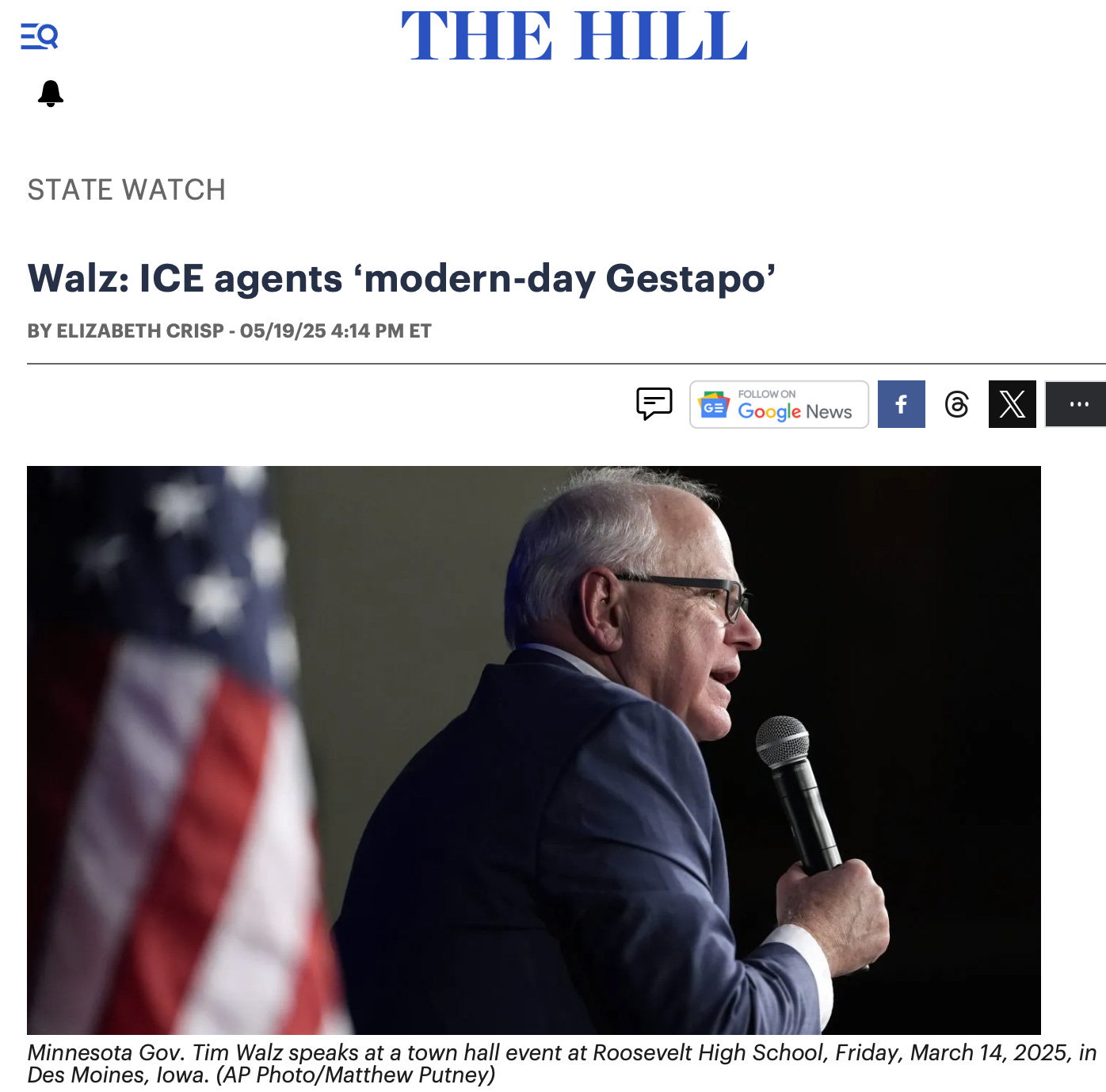
In a May 2025 commencement address, Minnesota Gov. Walz likened federal immigration agents to Nazi police — a striking claim not because enforcement is new, but because for decades it was treated as basic, bipartisan governance.
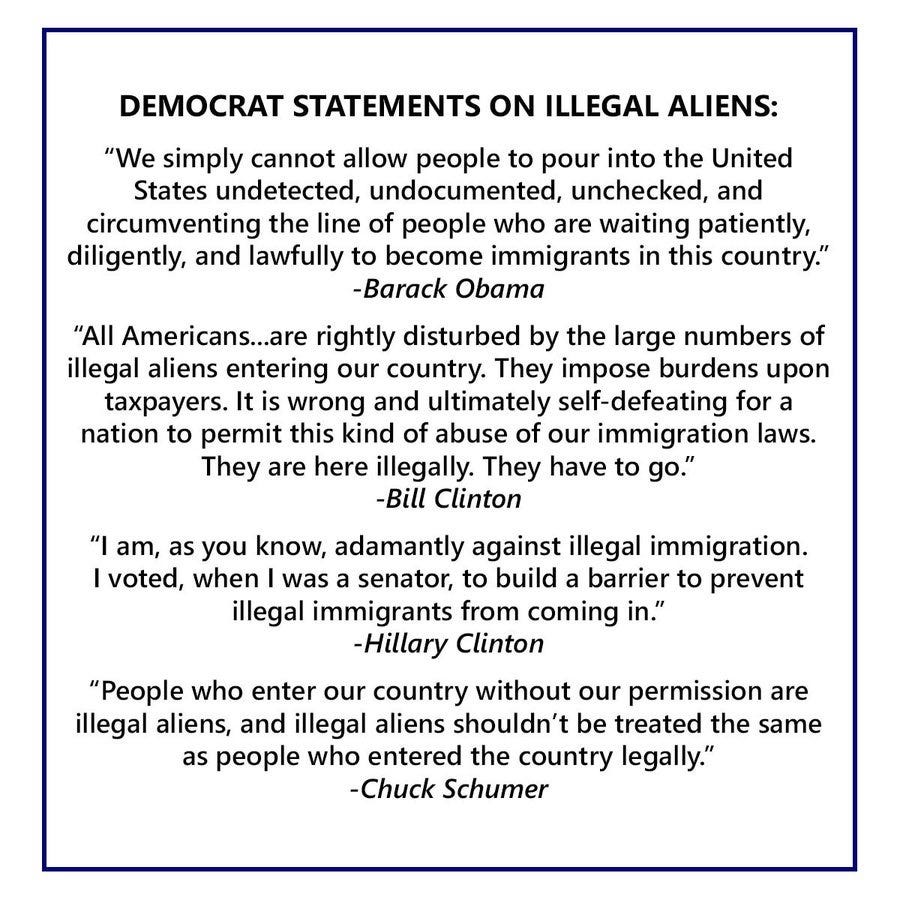
Until recently, leaders across parties argued that enforcing immigration law — and not prioritizing those here illegally over citizens and lawful immigrants — was a matter of fairness, not cruelty:
Enforcement Breakdown and the Fraying of Compassion
What changed wasn’t the logic — it was the incentives. As economist Milton Friedman put it in this video: “You can have open borders, or you can have a generous welfare state…but you cannot sustainably have both.”
National data show higher welfare use in households headed by illegal immigrants — evidence that eligibility rules and enforcement are essential to a sustainable safety net:
Welfare Participation by Household Type (Center for Immigration Studies, 2022)
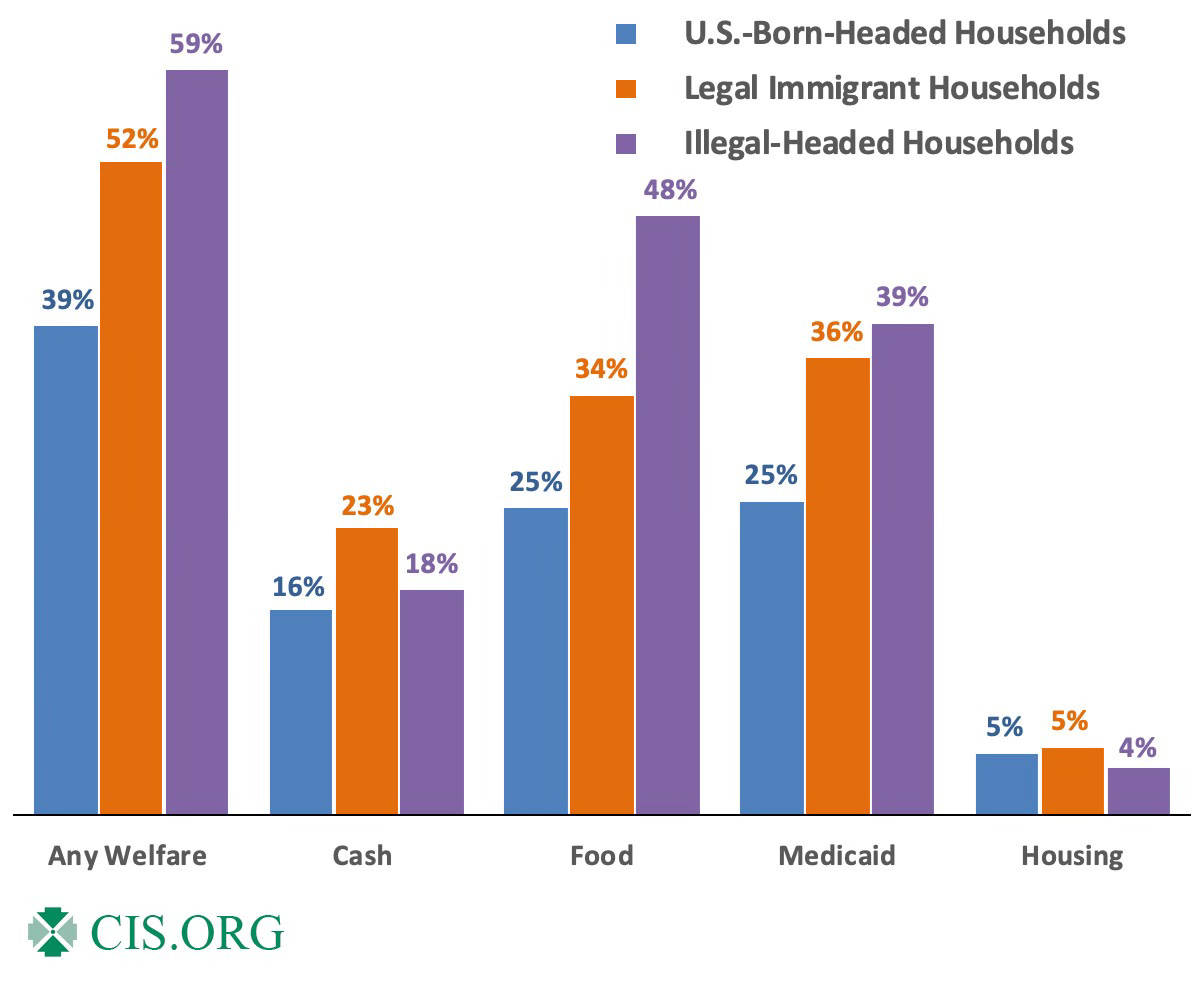
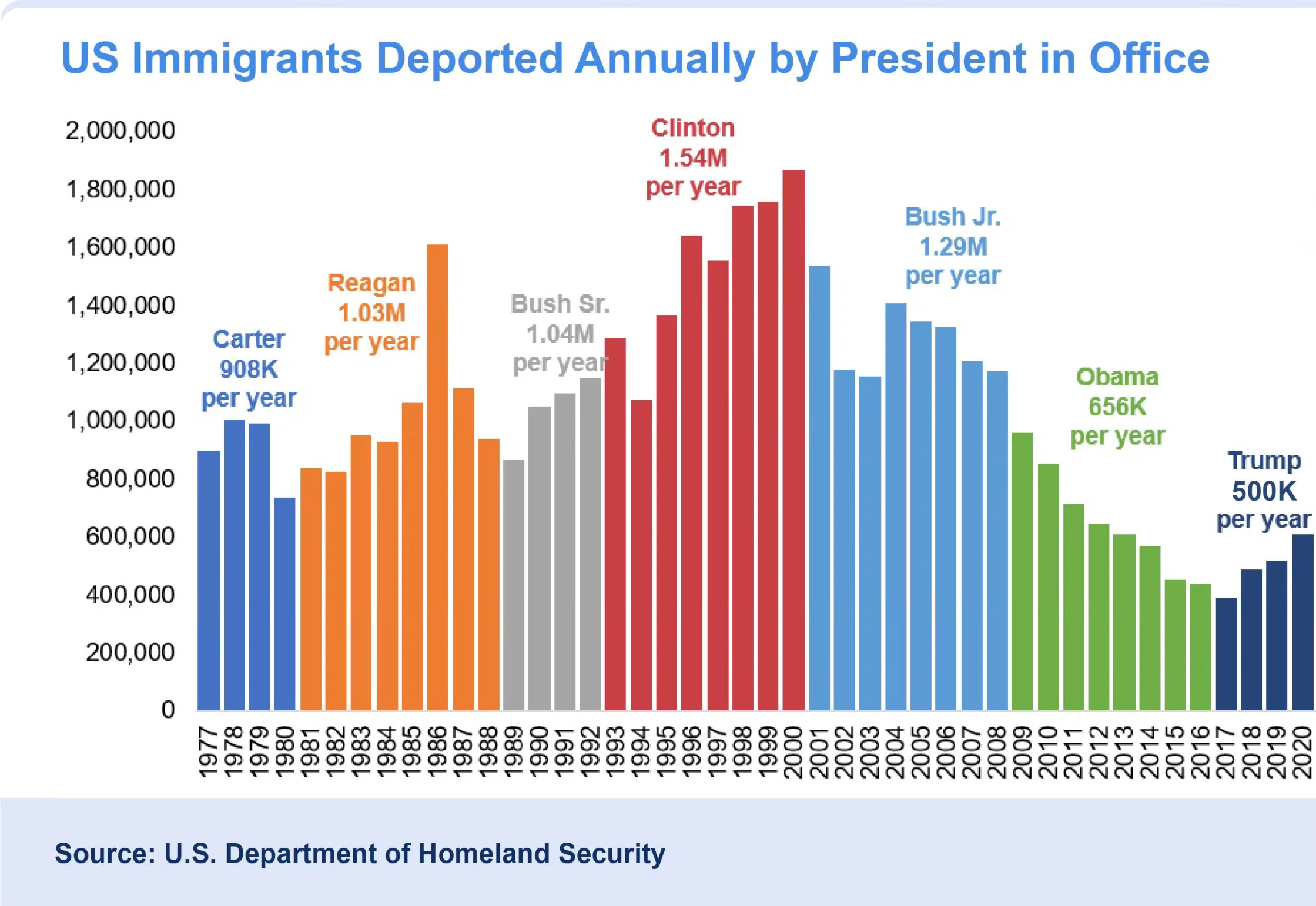
That principle guided bipartisan immigration enforcement for decades, with deportations treated as basic governance rather than moral extremism, as this chart makes clear.
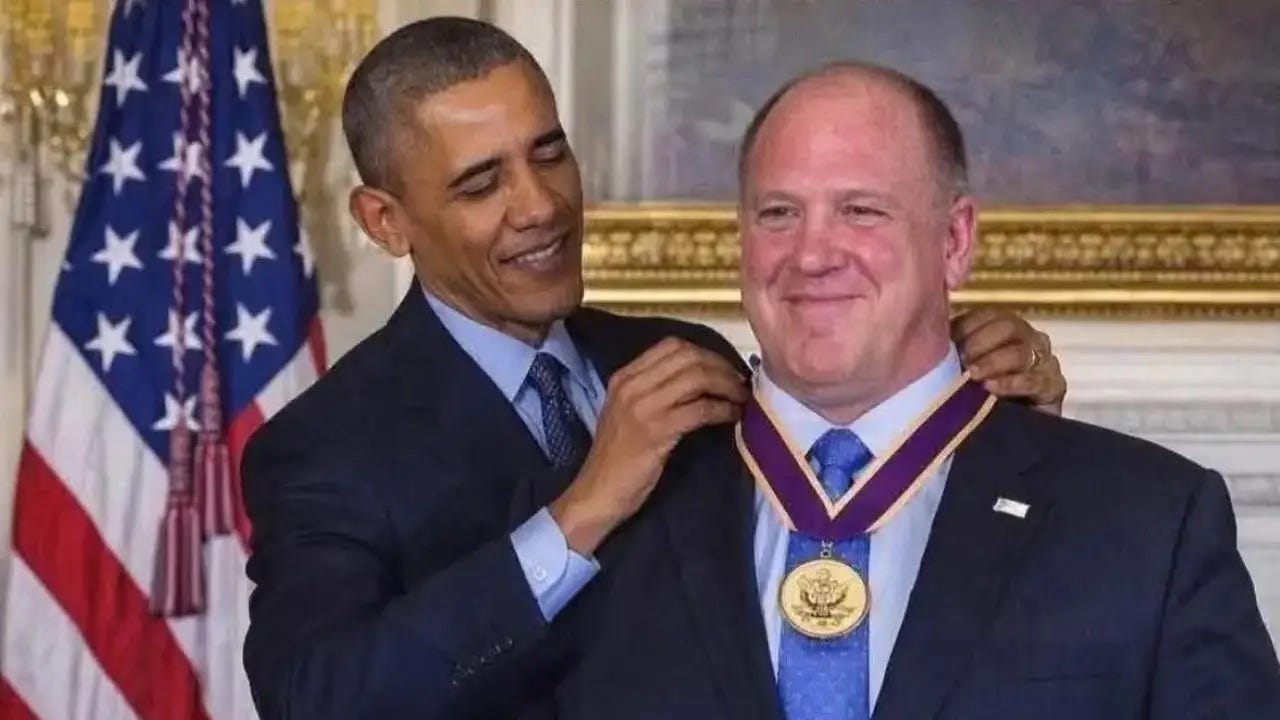
The history of immigration law enforcement includes now-vilified figures once praised. In 2015, Tom Homan —currently Trump’s “Border Czar” — received the Presidential Rank Award from President Obama for effective ICE leadership.
In December 2024, The New York Times reported that the immigration surge was the largest in U.S. history, surpassing even late-19th- and early-20th-century waves. The foreign-born share of the population returned to levels unseen since the 1850s, straining the safety net nationwide.
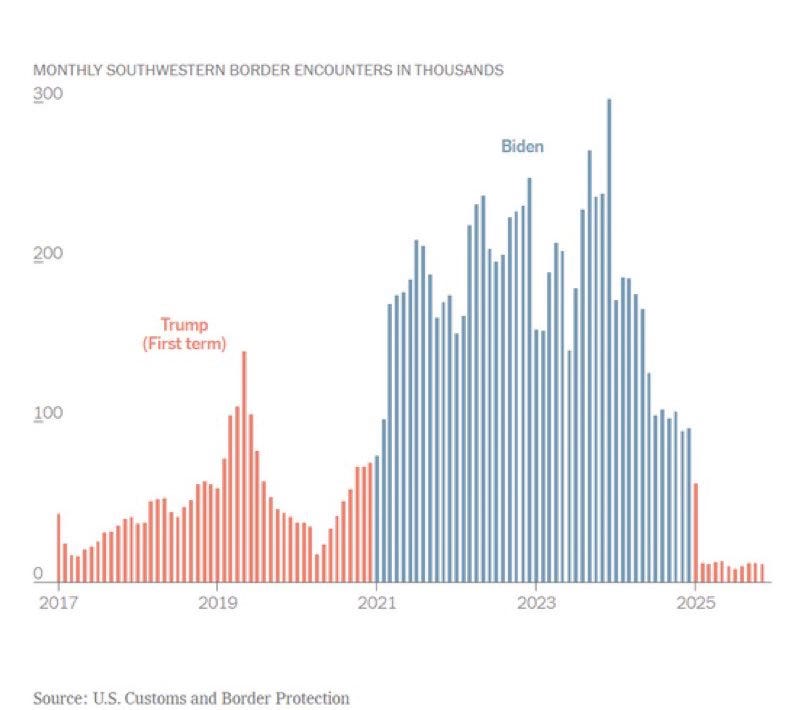
In 2025, as border encounters plummeted, violent crime and deadly overdoses also fell sharply – a correlation that suggests consistent enforcement may bring broader public-safety benefits.

When consistent enforcement delivers improved safety and fewer deaths, equality under the law is no longer abstract – it is protective compassion. But when enforcement is treated as a moral failing rather than a civic responsibility, the rule of law erodes, and the vulnerable bear the cost.
Compassion As a Cover for Fraud
Generous safety nets depend on rules that are real and applied equally. When enforcement falters or scrutiny is treated as suspect, programs meant to protect the vulnerable become ripe for exploitation.
Minnesota’s recent welfare scandals illustrate the cost: billions were diverted through sham providers, leading to dozens of indictments. When officials tried to stop payments, some operators sued for discrimination, recasting oversight as prejudice.
The con man at my doorstep understood exactly how this works. In Minnesota today, the same tactic tempts many to look away from fraud – raise concerns and risk being called racist; stay silent and be praised for “kindness.”
Manufactured fury amplifies this dyamic by distorting facts and raising the cost of lawful enforcement. Viral stories — like the claim that ICE “detained” a five-year-old boy in Minnesota — spread rapidly, only for facts to emerge that the father fled, leaving the child while ICE ensured his care, not custody.
The danger comes from distortions hardening public opinion before facts emerge, turning lawful action into presumed cruelty. When scrutiny is treated as malice, enforcement becomes politically radioactive, oversight weakens, and exploitation flourishes under the banner of compassion.
To avert exploitation, true compassion requires the courage to enforce the law fairly and openly.
The Courage of Protective Compassion
King’s nonviolent campaigns embodied protective compassion: confronting unjust laws without trampling the rights of others, trusting that the rule of law could be redeemed.
King didn’t advance civil rights by treating law as optional or demonizing enforcers. Instead, he distinguished just from unjust laws – obeying the just, breaking the unjust openly, and accepting punishment to “arouse the conscience of the community.” That, he said in his Letter From Birmingham Jail, was the highest respect for law.
That model matters now more than ever.
In Minneapolis, protest has shifted from revealing injustice to obstructing enforcement. Sanctuary policies that block cooperation between law-enforcement agencies, activists trained to interfere with federal officers, and political leaders who praise defiance while condemning oversight have produced confrontation, not compassion.
We don’t fix this by demonizing communities or pretending nothing is wrong We fix it by recovering the principle that made America generous in the first place: equal rules, equal scrutiny, and equal dignity under the law.
I am the granddaughter of immigrants who came here legally and built better lives because King’s “promissory note” was never just for native-born Americans. It was for families like mine who trusted the law would protect the vulnerable rather than abandon them, as it had in their native countries.
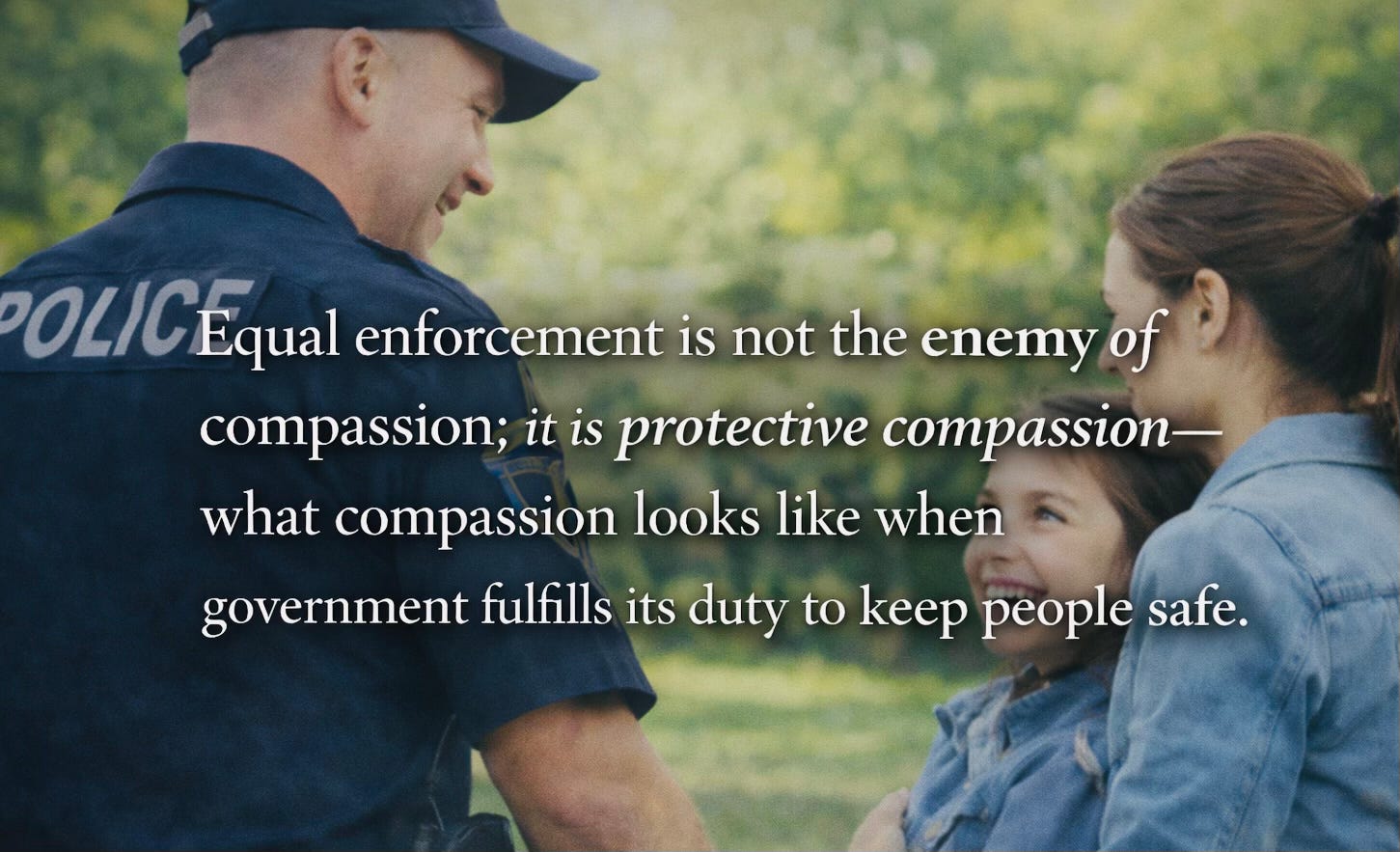
Equal enforcement is not the enemy of compassion; it is protective compassion – what compassion looks like when government honors its duty to keep people safe enough to flourish. When government fails in that duty, people do not become more generous; they become fearful and defensive, doubting the possibility of a shared civic life.
So here is the choice: will we keep surrendering to false binaries that turn disagreement into moral condemnation, or recover the protective compassion King modeled — courage disciplined by law?
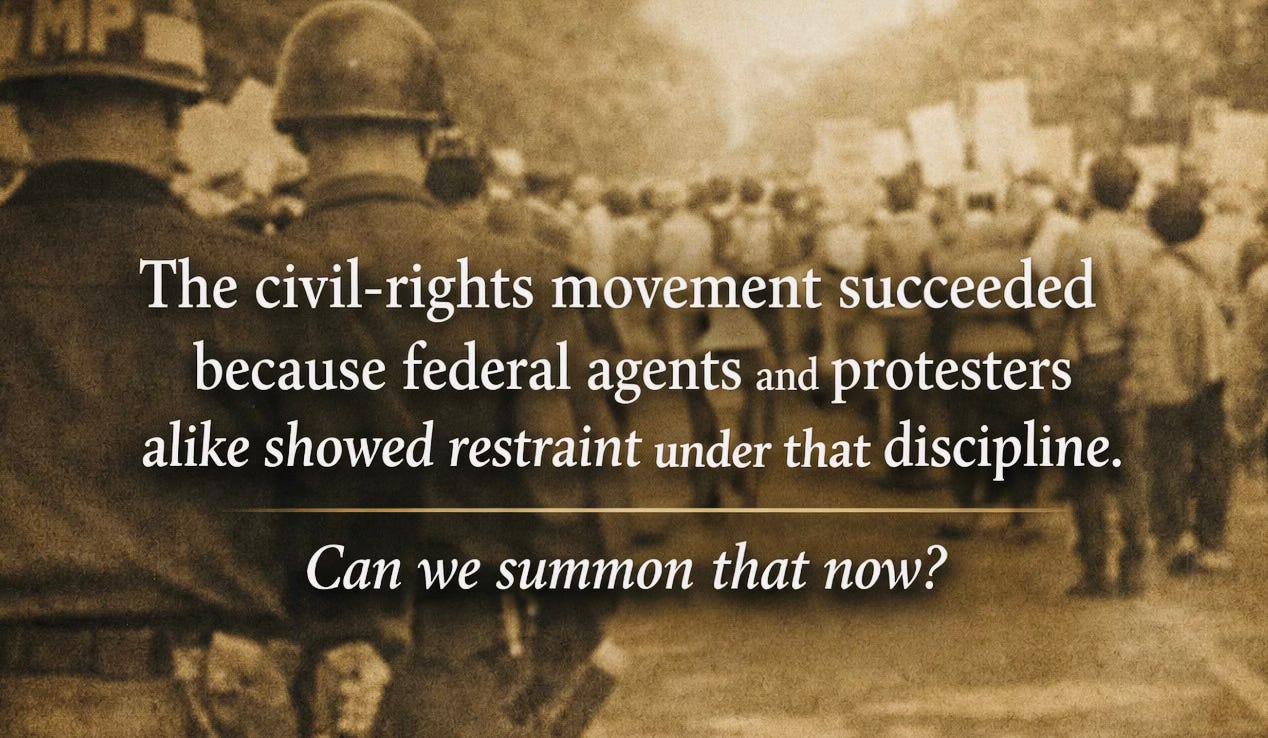
America remains human history’s greatest experiment: a multiracial, self-critical democracy that has not –yet – descended into tribal violence. Isn’t it more likely to endure if we preserve the methods King used to move hearts and minds in the turbulent 1960s – truth-telling, equal enforcement, and peaceful, principled reform?
King rejected the false choices we face today — between justice and order, compassion and law — and showed that a free society requires all of them, together. And it worked: the civil-rights movement succeeded because federal agents and protesters alike showed restraint under that discipline.
Can we summon that now?
Join the conversation: How can we reclaim King’s model today?
I’d love to hear your thoughts on this moment’s consequential issue. Comment below.
I was thinking about the other consequences that officers have to endure when they have to take a life in self defense and the rioters only care about their “feelings”. It is not an easy thing to take a life no matter how trained one is, the trauma that the officers go through in the aftermath is horrific I’m sure. I pray for them and their families for protection and perseverance. The lies the media is spreading about these officers are just as guilty as the rioters! False journalism should be prosecuted to the fullness of the law as well. I would love to see water hoses sprayed on these treasonous rioters!!! Send them back to where they came from.
Well done Melanie. This sort of rational, thinking seems to have been discarded by the modern left who operate on emotion and memes. When visions of Nazis fill your mind, not much room left for critical thought.
Somehow, we have to get the non-brain washed to pay attention to messages like this.