

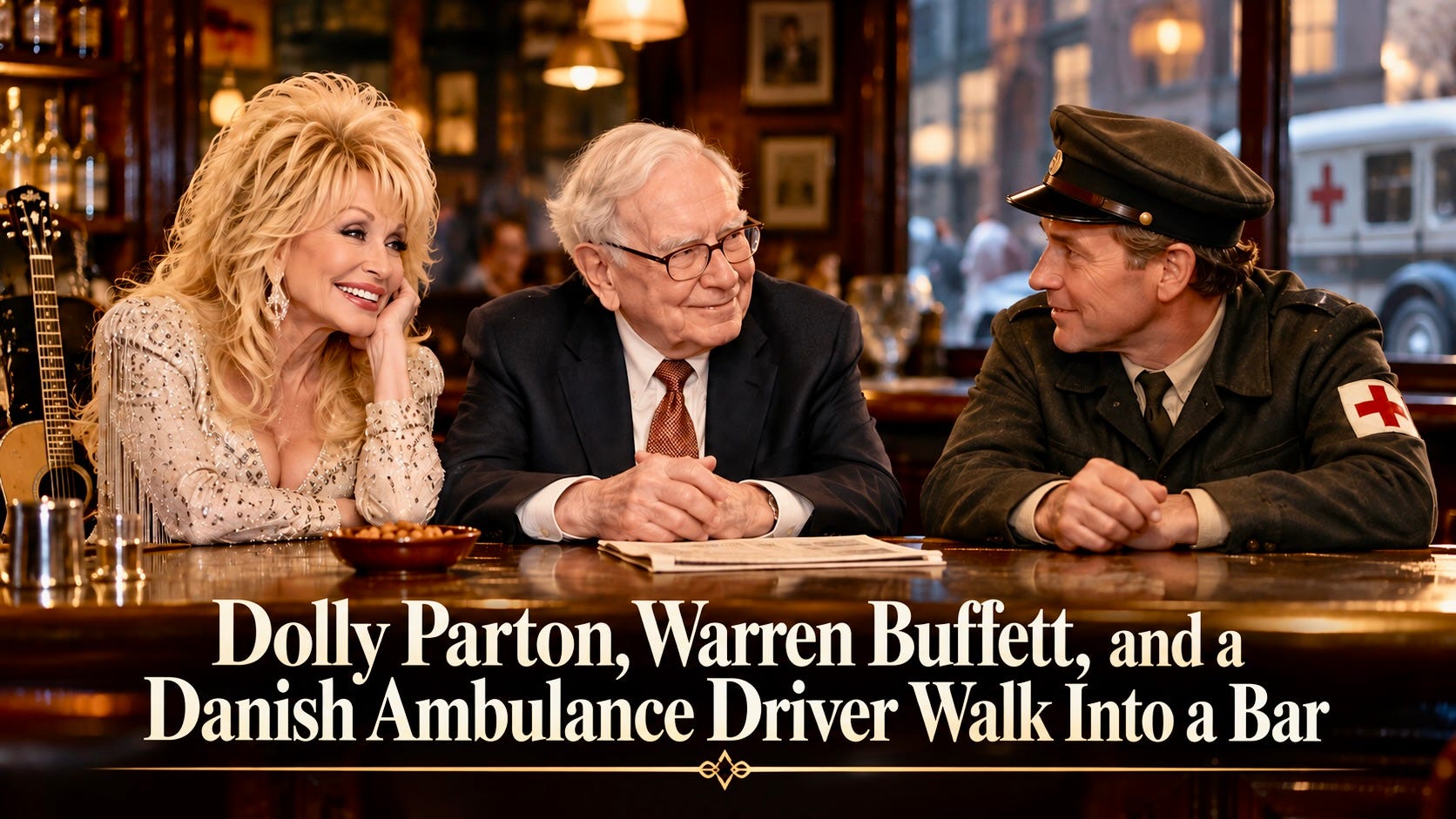
Warren Buffett, perhaps the world’s greatest optimizer of value, offered some unexpected advice in his final letter as CEO of Berkshire Hathaway, written at 95.
Dolly Parton, who died weeks ago at 80, was remembered as much for the stories people told about her as for the songs.
A billionaire’s last letter, a legend’s last chapter, and the remarkable story of a Danish ambulance driver led me to this:
Most of us will not become legends. But the stories told about us may last longer than we realize.
What choices should we make to write the story we want told of our lives?
This was the question I wanted to address on Yom Kippur, Judaism’s annual day of introspection, repentance and forgiveness.
The video and lightly edited text of my remarks are below.
There’s a story Jews tell about the Chofetz Chaim, one of the great Jewish sages.
One of his students was on trial for espionage by the authorities in Czarist Russia, and the Chofetz Chaim came to testify to his innocence. To explain why the rabbi’s word should carry weight, the student’s lawyer told the judge a story: when a man once stole from him, the Chofetz Chaim ran after him shouting that the goods were actually ownerless, so the fleeing man would not be guilty of stealing.
The judge was skeptical.
The lawyer said,
“I don’t know if it happened, Your Honor. But they don’t tell stories like that about you or me.”
That last line should inspire the introspection that this season demands.
Today we are all in that courtroom. Not as the sage. As people about whom a story will be told.
It’s a chance to ask: what story is my life telling? And if it isn’t the story I want, what choices can I make to change the ending?
95-year-old Warren Buffett put it this way: “Decide what you would like your obituary to say and live the life to deserve it.”
Isn’t that the challenge of Yom Kippur? Our story isn’t finished.
We still get to choose the person we want to be—and what responsibilities we’re willing to carry.
In modern American Judaism, tikkun olam—repairing the world—has become almost a catch-all for Jewish responsibility.
It’s a powerful aspiration. But how far does our responsibility to repair the world extend?
In 1968, long before he became Britain’s Chief Rabbi and a leading Jewish thinker, Jonathan Sacks was a young philosophy student troubled by that question. On a trip to America, he met one of the great Hasidic rabbis of the age.
Sacks challenged him: Why was Judaism so preoccupied with Jews? Look at the world—famine in Africa, overpopulation, political strife. Surely, we have responsibilities not just as Jews, but as citizens of the world.
Almost sixty years later, a movement called Effective Altruism asks essentially the same question—with a spreadsheet.
If every human life has equal worth, why should proximity determine whom we help? Shouldn’t money and effort go to where they will do the most good?
This is the question now at play in debates over Artificial Intelligence: Should even a small chance that advanced AI could someday threaten humankind justify slowing its development at the cost of delaying benefits like early cancer detection, scientific breakthroughs, and greater personal productivity?
Underneath it all is Sacks’ question: Whom are we responsible for—and who comes first?
The Rebbe answered with three Hebrew words: Aniyei ircha kodmim. The poor of your own town come first.
Sacks was baffled. The Rebbe explained: We have many duties. But there are priorities among them. Family comes before town; one’s own community before another.
The Rebbe wasn’t asking Sacks to choose between his own people and humanity. He was teaching him that we must sustain ourselves and our communities if we are to sustain others.
Sacks connected the teaching to Hillel: “If I am not for myself, who will be? But if I am only for myself, what am I?”
We might call the Rebbe’s lesson “Effective Covenant.”
It wasn’t a retreat from repairing the world. It was a lesson in how.
Effective Altruism asks: Where can I do the most good?
Effective Covenant asks: How can I repair the world if I neglect repairing myself and my community?
And sometimes “my community” includes people I’ve never met.
During the Nazi occupation of Denmark, an ambulance driver named Jordan Knudsen learned that the Germans were preparing to round up Denmark’s Jews.
Knudsen was ready to help. There was just one problem: he didn’t know any Jews.
So he opened the Copenhagen telephone directory, looked for names he thought might be Jewish, found them, and drove them in his ambulance toward the boats bound for safety in Sweden.
Years later, Knudsen was asked why he had risked himself for people he didn’t know.
“What else could I do?” he replied.
I have not found a surviving photograph of Jordan Knudsen. That may be fitting. The rescuers were ordinary Danes.
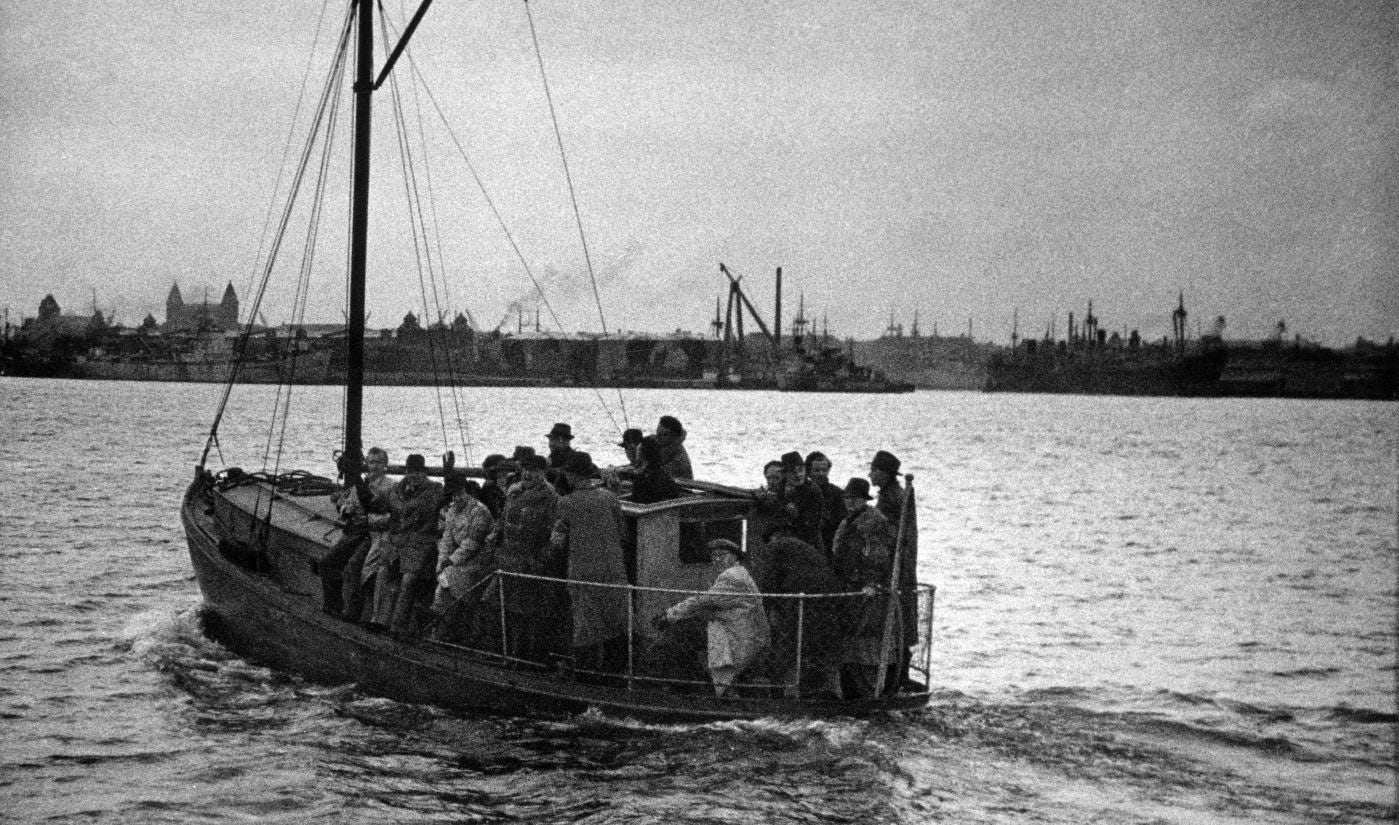
Knudsen wasn’t Jewish and the people he rescued were strangers. But they were strangers in his community—and that was enough to create an obligation.
He didn’t need to calculate where he could do the most good in the world. He just needed the next address.
Yet think how easily he could have questioned himself into doing nothing: What could I possibly do? I’m one man. I don’t know any Jews. I’m an ambulance driver up against the Nazis.
Knudsen chose the other meaning:
What else could I do but act?
Judaism has a word for that response. Abraham says it. Moses says it. Samuel says it: Hineini. Here I am.
And notice the pronoun: I.
That’s Yom Kippur’s focus:
What needs repairing in me?
Because before there can be tikkun olam—repair of the world—there must be a repairer.
That’s you and me.
And Yom Kippur understands that repair works in both directions.
When we have hurt someone, we must repair what we’ve done. And when someone hurts us, we have a different choice: do we let the injury fester, or find a way to move beyond it?
Which brings me to Dolly Parton.
Dolly loved joking about the two physical attributes that were almost as admired as her music. When asked by David Letterman to rank her Top Ten pet peeves, number one was:
“Nobody notices I’ve got a great ass, too.”
Yet when Dolly died last month, people weren’t talking about her appearance—or even her extraordinary talent. Like the Chofetz Chaim, they were sharing stories about how she treated people.
None of us can choose to have Dolly Parton’s gifts. But we can make the kinds of choices that inspired people to tell those stories about her.
Early in Dolly’s career, Porter Wagoner was the powerful older star who helped make her famous. But when Dolly wanted to move on from his show, Porter didn’t want to let her go.
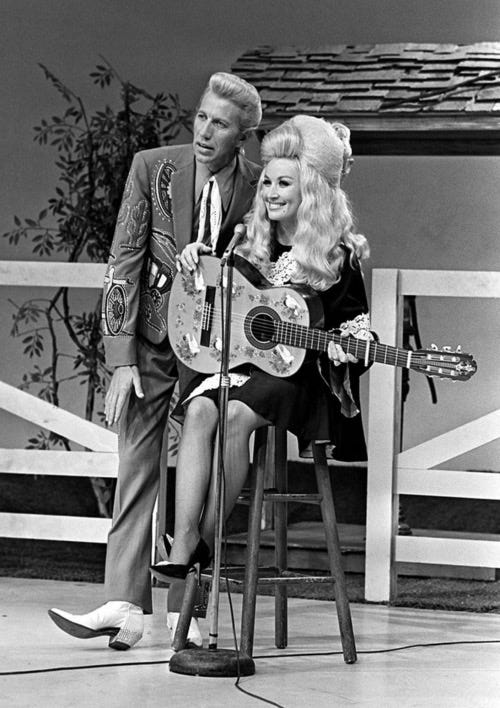
Trying to soften the blow, Dolly wrote Porter a song, sat down with him and sang “I Will Always Love You.”
He let her leave. But he sued and disparaged her until she paid him a million dollars to disentangle herself.
Years passed. Dolly became an American icon, while Porter fell into financial trouble. But Dolly hadn’t forgotten that Porter had given her the break that launched her career.
So when creditors seized his music catalog, Dolly bought it—and gave it back to him.
Years later, when Porter was dying, she went quietly to his hospital room with her guitar and sang to him.
Dolly didn’t pretend Porter hadn’t hurt her—she’d fought hard to get free of him. But she also didn’t let that hurt erase what he’d once done for her—or determine how she would treat him.
Forgiveness didn’t repair the past. It repaired her relationship to it—and how much power it would have over her future.
That is one of the gifts of forgiveness. It releases the repairer, too.
And isn’t that what we’re trying to do today?
Some of us need to forgive. Some need to ask forgiveness. Some need to repair a relationship—or something in ourselves.
And for wrongs between people, Yom Kippur alone isn’t enough. If I’ve wronged you, I can’t make up for it by being extra nice to somebody else. I have to go to you.
Maimonides gives us the test of true repentance: If we're faced with the same choice again, we choose differently.
Which brings me back to the question I asked at the beginning:
What story is my life telling? And if it isn’t the story I want, what choices can I make to change the ending?
We can’t rewrite the chapters we’ve already written. But we can write the next one differently.
Warren Buffett, perhaps the greatest optimizer of value the world has ever known, arrived at much the same conclusion:
“When you help someone in any one of thousands of ways, you help the world. Kindness is costless but also priceless.”
There’s one final story I’d like to leave you with.
On Yom Kippur afternoon, Rabbi Levi Yitzchak closes his eyes for a moment and imagines himself standing before God’s throne. He pleads for an end to human suffering, for the world to be redeemed.
In his vision, God agrees—with one condition: Levi Yitzchak must remain there until the day is over.
Then Levi hears a cry.
Chaim the washerman is in agony—faint from working overtime and exhausted from fasting.
Levi Yitzchak opens his eyes and goes to him.
The angels are astonished. How can he walk away now, when the world is about to be redeemed?
Levi Yitzchak answers:
“Who says the price of saving the world should be the life of Chaim the Washerman?”
Maybe that’s Effective Covenant at its simplest: saving the world requires not overlooking the person beside us.
Remember what the lawyer said about the Chofetz Chaim: “They don’t tell stories like that about you or me.”
Maybe not yet.
But our stories aren’t finished yet.
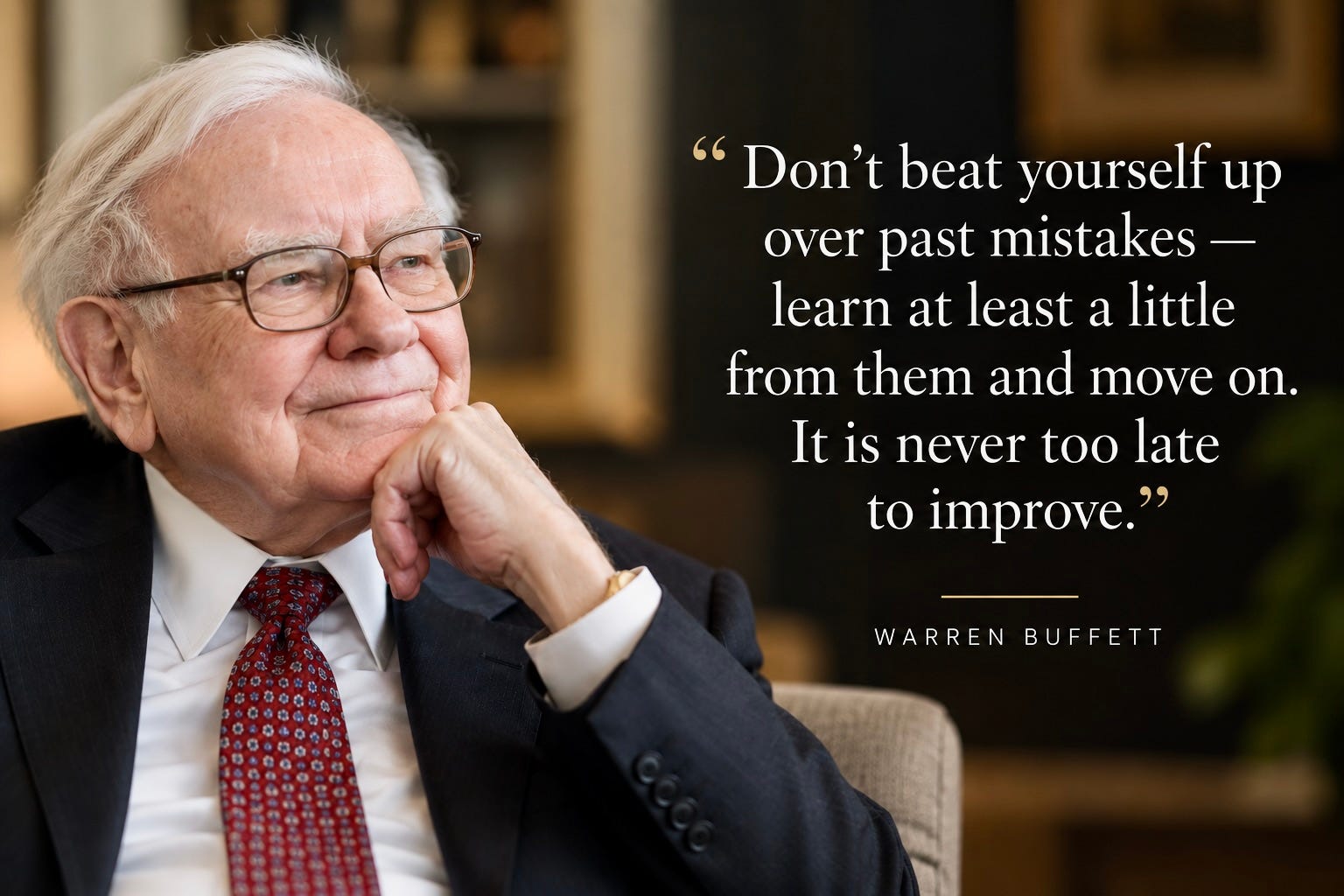
As Buffett put it in his letter’s final sentence,
“You will never be perfect, but you can always be better.”
That’s not a bad description of teshuvah.
May the choices we make in this new year write the story we want told of our lives.
And may we all be signed and sealed in the Book of Life for another year of being blessed—and being blessings to the world.
Amen.
This was Part Two of my remarks this year at Temple HilMel, the High Holiday gatherings my friend Hilary and I started during COVID. Part One, my Rosh Hashanah remarks, “Why Do the Jews Loom So Large?,” asked what we Jews are responsible for carrying forward—and why what we carry matters to the world.
On Yom Kippur, I turned the question inward: What do we need to repair in ourselves if we are to continue being blessings to the world?