

The White House Correspondents’ Dinner is meant to celebrate a free press—and the idea that disagreement doesn’t require violence. This year, it became something else.
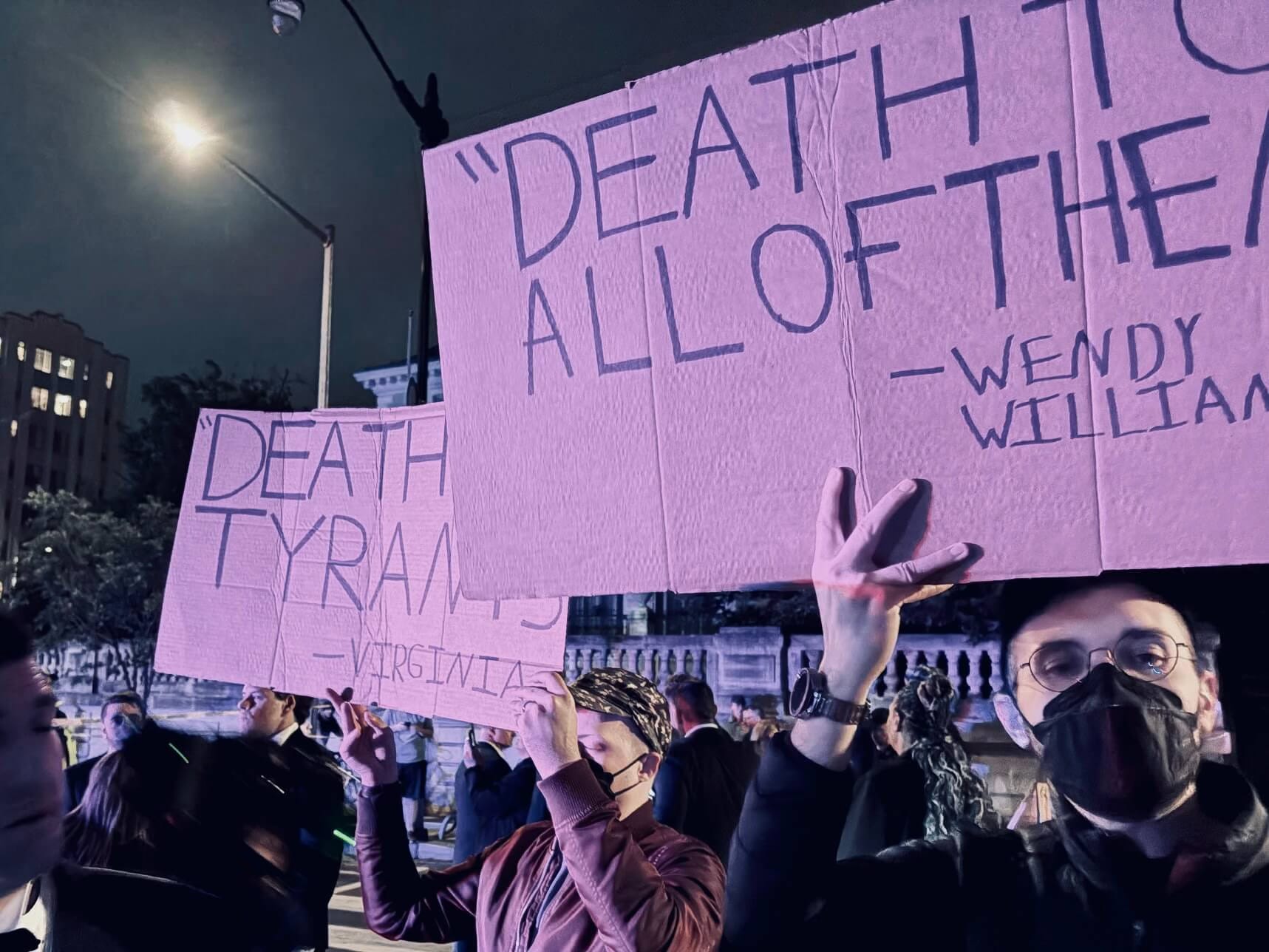
Outside, protesters held signs reading “Death to all of them.” Inside, the event was interrupted by another attempted assassination of President Trump—this time targeting members of his cabinet.
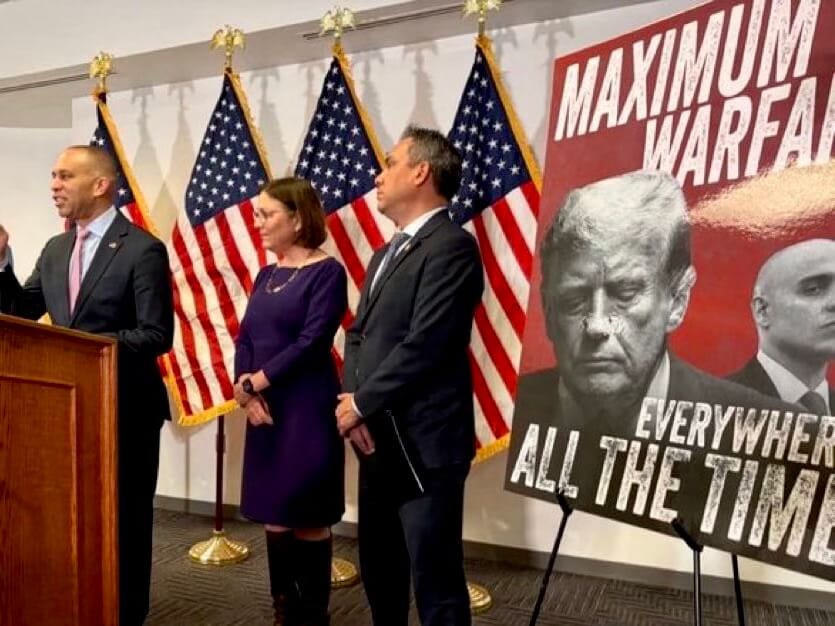
Days earlier, congressional leaders stood before a poster of President Trump calling for “maximum warfare… everywhere… all the time.”
The New York Times, meanwhile, platformed streamer Hasan Piker — one of the most popular political voices for younger Americans, now influential enough that candidates campaign with him — who has said America “deserved 9/11” and framed the UnitedHealthcare CEO’s murder as understandable, normalizing violence as a response to grievance.
Then came Cole Allen, a 31-year-old, graduate school–educated American with no history of political violence—who chose to travel across the country not to change the system, but to destroy it. In writings attributed to him, Allen described himself as a “Friendly Federal Assassin,” casting the attack as justified because “someone had to do it.”
He believed he was acting out of responsibility—against a system he saw as illegitimate.
Allen isn’t alone. Polling shows growing support for political violence, especially among younger, educated Americans.
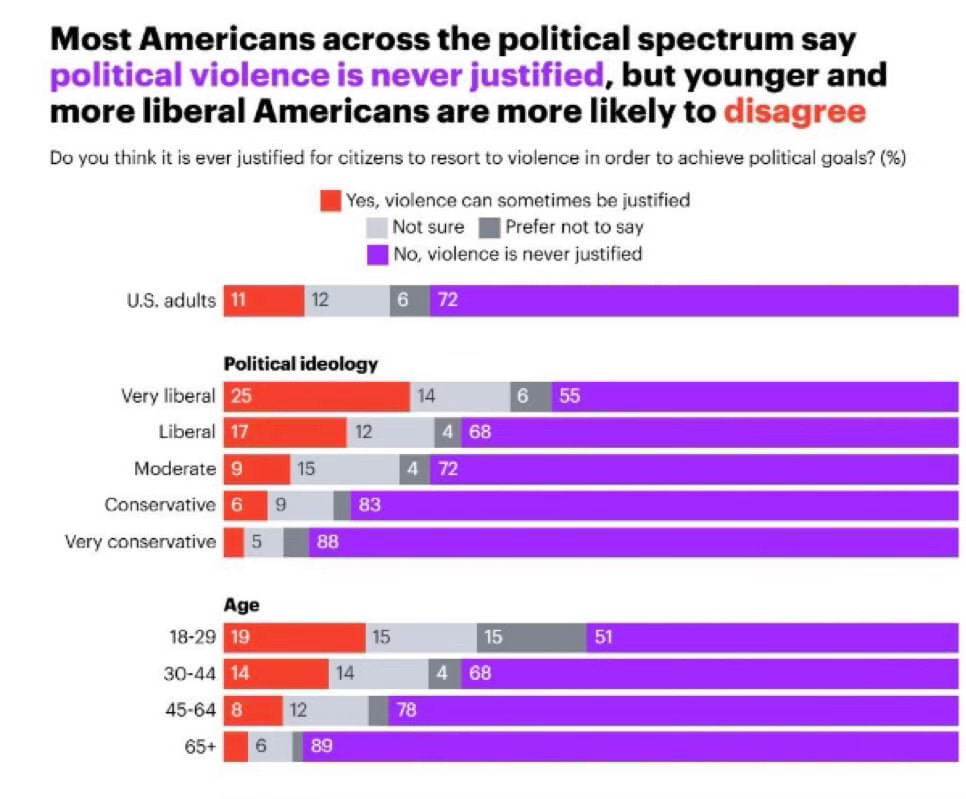

How did we get to a place where political violence feels justified to some Americans?
The First Time I Was Wrong About Trump
The answer didn’t start with violence. It started in 2015, when Donald Trump descended his golden escalator and upended a political order Americans had already begun to distrust.
I first realized I might be wrong about Trump at Thanksgiving 2015, when my mother and mother-in-law said they wanted a businessman in the White House.
Before Trump’s nomination, I wrote about my discomfort with Trump’s bombast and temperament, joking: If Hillary Clinton and Donald Trump are in a fatal car accident, who survives? Answer: America.
And yet, by Election Day, I had come around — not because I trusted Trump, but because I had lost confidence in the system he was running against.
Filmmaker Michael Moore called Trump a “Molotov cocktail” thrown by the little people at a self-dealing ruling-class system. I saw him as a disruptive ‘pathogen’ that might provoke an “antibody response,” restoring constitutional guardrails.
I wasn’t wrong that Trump would stress-test our institutions. I was wrong to think that stress would strengthen those guardrails. Instead, it created pressure to break them in the name of “saving democracy.”
As the backlash intensified, I warned that elections shouldn’t become life-or-death struggles — with half the country coming to see the other side as a threat. When losing feels intolerable, the guardrails come off.
So I asked: Wouldn’t it make America great again if we didn’t have to care so much about who won the White House?
The Autoimmune Response
What I didn’t anticipate—and what we’re living with now—is bigger than Trump.
I expected an antibody response that would restore constitutional guardrails. What we got was an autoimmune disorder: a reaction so extreme it began attacking the norms it was meant to defend.
I still cringe at Trump’s bombast—his recent spat with Pope Leo is a reminder his style often undercuts his substance. What if the real danger wasn’t his temperament, but what our reaction revealed about us — that instead of judging ideas on their merits we started judging by the jersey.
In a constitutional system, elections confer legitimacy—even when we dislike the outcome. But as Trump took office, that legitimacy became conditional, undermining the system designed to protect us from one another.
Positions that once had broad support became suspect once Trump embraced them. Enforcing immigration law became “fascism.” Preventing Iran from getting a nuclear weapon became “warmongering.” Requiring voter ID became “suppression.”
The resistance went so far it became a partisan litmus test over funding the Secret Service agents protecting the very officials who had voted to defund them.
These positions were common ground—until they weren’t.
The Referee Lost the Game
If Trump was the stress test, the press was supposed to be the referee.
Instead, it lost credibility. As veteran journalist Mark Halperin argues, the press “doesn’t have standing” with many fair-minded Americans after years of overhyped Russia-gate coverage and refusal to seriously report on President Biden’s decline—what he calls “professional malpractice.”
After the Hilton shooting, 60 Minutes read portions of Allen’s manifesto to President Trump on air, asking him to respond—elevating an assassin’s unfounded claims to a national audience.
When the referee blows calls that big and insists nothing is wrong, players and fans stop trusting the scoreboard. Once that trust collapses, we stop judging what’s true or effective and start judging by the jersey.
That shift shows up on Iran. For decades, preventing a nuclear weapon was a shared goal. Now the debate turns on who gets the credit.
Tom Friedman has long argued Iran must not get a nuclear weapon. After Trump set the program back, he admitted: “I really want to see Iran defeated… but I don’t want to see Donald Trump politically strengthened.”
On the right, Tucker Carlson responds with apocalyptic warnings—World War III, mass casualties, economic collapse—turning worst-case scenarios into near certainties.

Different camps. Different motives. Same result: policy is no longer judged on its merits, and we stop rooting for outcomes we once agreed were good.
In a confrontation with a regime that’s been killing Americans for decades, that’s not just incoherent — it’s dangerous.
What We’re Missing on Iran
Look at the Iran scoreboard and a different picture emerges, as I argued recently.
For half a century, American presidents of both parties have said the same thing: Iran must not get a nuclear weapon. The only question was how to stop them.
But that debate has obscured a simpler one: is the regime stronger or weaker — closer to a bomb, or further from one?
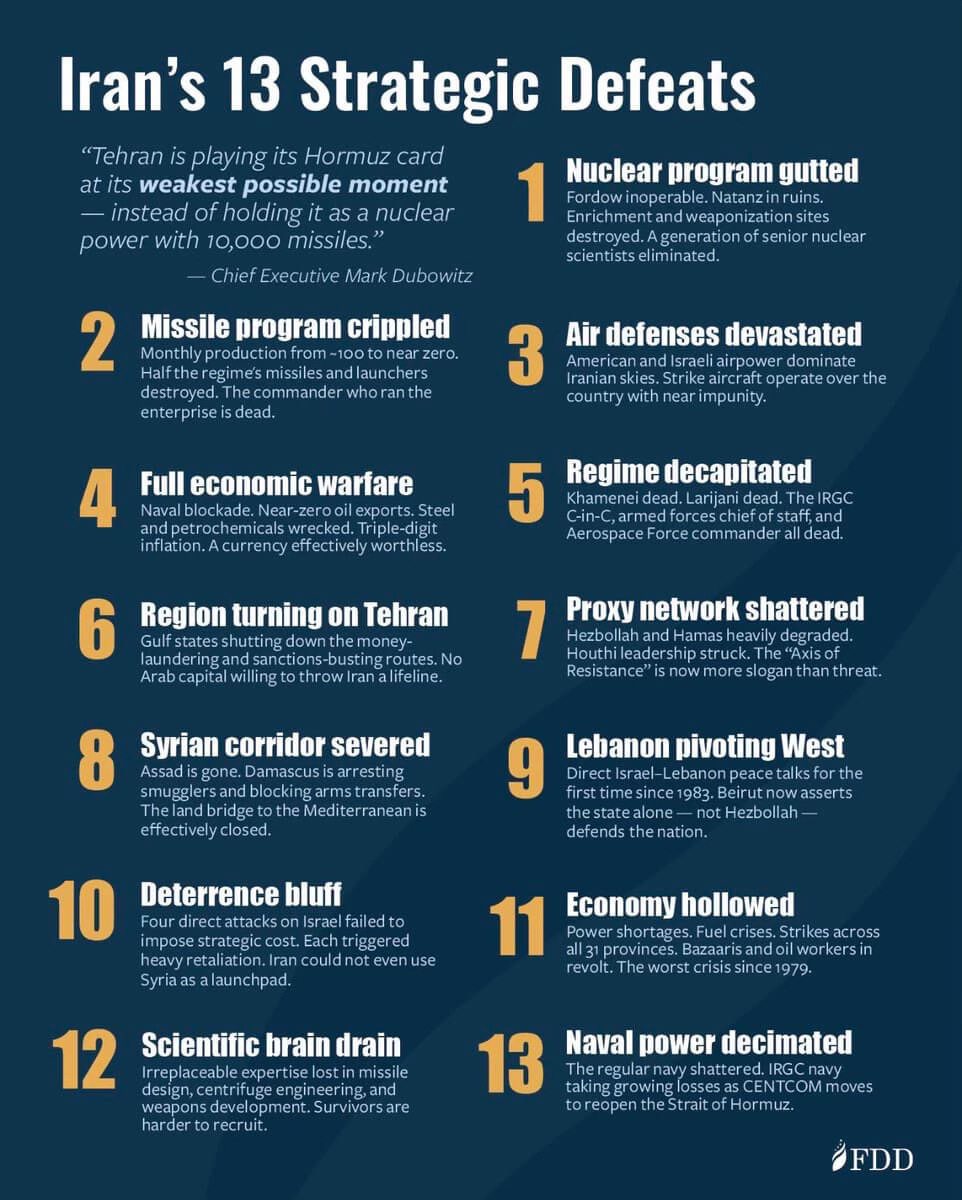
Iran’s nuclear program has been set back, its network weakened, and pressure inside the country is rising — from shifting alliances in the Gulf to cracks within Iran itself. Even in Lebanon, long a stronghold of Iranian influence, efforts are underway to sideline Hezbollah.
Inside Iran, that pressure is being felt by the people the regime fears most—dissidents once facing execution have seen sentences commuted.
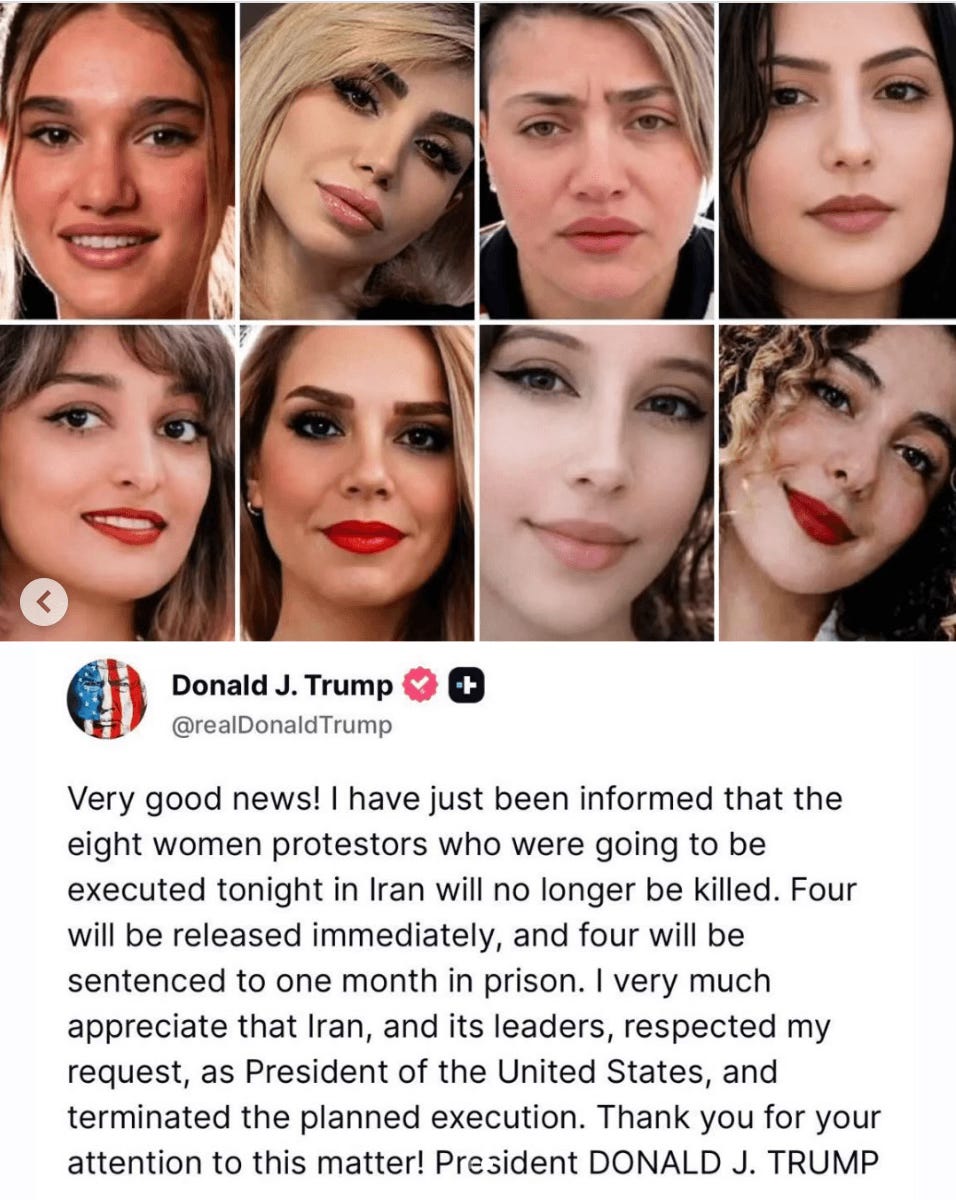
The baseline matters. When Trump took office, Iran was on a glide path to nuclear breakout, funding proxies across the region. The question isn’t whether his methods were conventional – it’s whether the outcome is better.
If those outcomes are discounted because of who delivered them, sustaining the pressure needed to finish the job becomes harder.
If President Obama or Biden had presided over a rollback of Iran’s nuclear and missile capabilities, severe economic strain and the first serious moves to neutralize Hezbollah, would anyone hesitate to call it a historic success?
When Words Become Permission
The real danger isn’t just that violence happens. It’s how it becomes thinkable.
After the shots at the Washington Hilton, most people were relieved the attack failed. But scroll through BlueSky—a fast-growing social media platform popular with younger, progressive users—and a different pattern emerges.
Very few posts openly endorsed the attack. They didn’t need to. Instead, they explained it:
“I’m not saying it’s right, but…”
“Violence is wrong, and yet…”
“You can only push people so far…”
The pattern is familiar: someone acts, others explain why it was understandable, and the next person feels more justified. Social media accelerates it—rewarding outrage and feeding moral certainty without counterargument.
Hasan Piker’s mainstreaming—from TikTok to the New York Times—is part of how those justifications moved from the fringe to the mainstream.
Allen didn’t see himself as a criminal—he saw himself as a patriot doing what others wouldn’t. He had been told repeatedly that his opponents weren’t just wrong, but dangerous—not misguided, but illegitimate; not competitors in a democratic system, but threats to it.
In a CNN interview, Obama advisor Van Jones warned that because the shooter survived, “there is a danger that people try to make him some sort of hero,” pointing to how Luigi Mangione—who killed a healthcare executive—was valorized online.
The danger isn’t what one person has done—it’s what others begin to feel justified doing next.
How the Center Moved
A consequences of this shift is that positions once considered mainstream are now treated as suspect—not because they changed, but because the center moved, as this chart depicts.
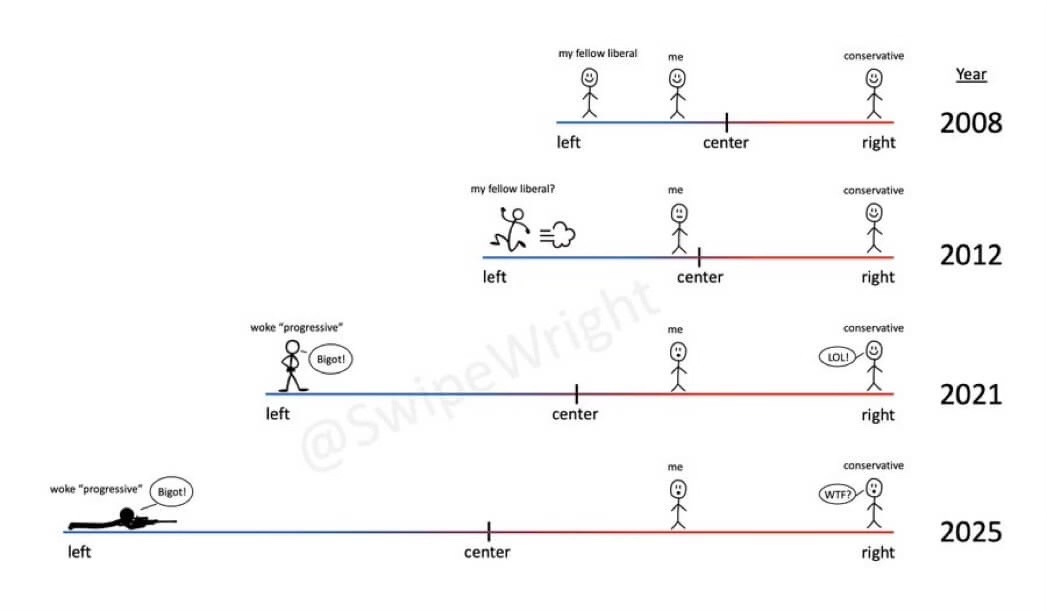
At the same time, rhetoric once confined to the fringes—talk of ‘fascism,’ ‘genocide,’ or the need to ‘stop’ opponents by any means—has moved into the mainstream, especially in institutions shaping younger Americans.
The “resistance” didn’t just oppose Trump’s policies. It increasingly resisted treating him and his supporters as legitimate participants in the system. Now, someone can hold a mainstream view—like enforcing immigration law or opposing boys competing in girls’ sports—and be treated not as wrong, but as evil.
When your opponent isn’t just wrong but illegitimate, persuasion is pointless and escalation feels justified. People don’t commit violence over policy; they do it when they believe they’re confronting evil.
How to Disagree Without Losing Your Judgment
So how do we speak clearly about someone as polarizing as Donald Trump?
It doesn’t require liking him or excusing his flaws. It requires something harder: refusing to let your judgment be dictated by your reaction to him.
Bill Maher, a longtime critic, chose to engage Trump—dining with him and later describing him as “gracious and measured.” He didn’t change his views. He rejected the idea that the only acceptable posture was distance and contempt.
That doesn’t make him a supporter. It makes him credible.
Senator John Fetterman does the same – working with Trump where he agrees and pushing back where he doesn’t, without turning disagreements into crises.
After the Hilton shooting, he was blunt:
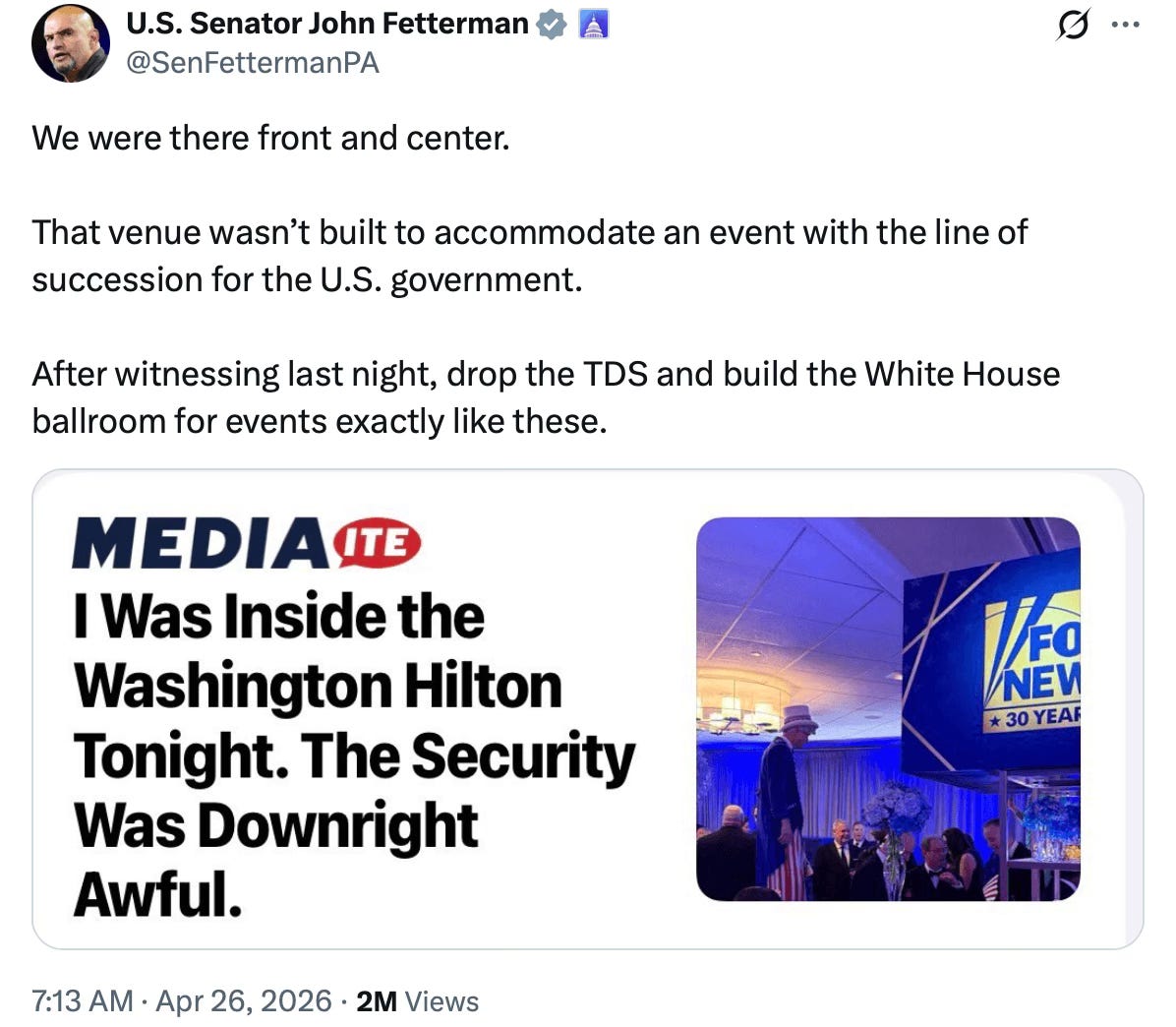
This isn’t new. It’s how the country used to function—deep disagreement, shared legitimacy.
When President Reagan was shot in 1981, the Academy Awards ceremony was delayed 24 hours out of respect. When Johnny Carson opened the show by acknowledging the attack and the president’s recovery, the audience rose in applause. Not for his policies. For the office. For the country.
Maher and Fetterman are doing what Carson’s generation understood: you can oppose someone’s policies while still treating them as a legitimate part of the system.
You don’t have to like Donald Trump to recognize that preserving the republic requires exactly that.
What Winning Requires
In 2016, I hoped Trump’s disruption would provoke a healthy “antibody response”— a return to the norms that make self-government possible. What we got was the opposite.
The Founders didn’t design a system for agreement. They designed one for conflict—on the condition that we continue to see one another as legitimate participants in it.
That humility makes disagreement possible without tearing the country apart—even as others normalize violence or act on it. It’s why America has endured far deeper conflicts, allowing generations—from the Founders to Lincoln to King—to work within a flawed system to form “a more perfect union,” not tear it down.
A country can’t endure if belief in it depends on who’s in power. It endures when we believe it can be improved—together. As we approach the 250th anniversary of the Declaration of Independence, it’s worth remembering: it assumed disagreement—and still insisted we remain one people.
You don’t have to like Donald Trump to recognize when an outcome serves the country—or to resist the urge to root against it.
That’s not agreement. It’s judgment—and how a fractured country stays united.
If this sharpened your thinking, share it with someone who sees this differently—and tell me where you agree or disagree below.
I encourage you to check out Mark Halperin’s 2WAY platform which brings people with differing views into honest conversation on the biggest issues of the day —exactly what we need more of right now.
Again, you nailed it!
As my wise mother cautioned me in the late 60s when I was protesting the Vietnam War, do not allow yourself to be a pawn especially for those who advocate violence - think for yourself - and remember changing the definition of a word empowers it. Those words ring today.
I can't let go of those ideals because they speak of a civilization that respects differences of opinions. Our country is unrecognizable! Because there are no repercussions for criminals, anti-semites, organized political hate, our country has lost definition. So called leaders lack common sense. Educators nurture bias. And the worst part is the "influencers" are the new rock stars to the youth.
And not surprisingly, they don't care that 35,000 Iranians protesters were murdered for their desire to live in a free society.
The problem is as you said, nothing is perceived with objectivity because the platform of the new undemocrat party is hate for our president.
Great article that EVERYONE should read!